I'm a cyborg, apparently.
I have diabetes, this isn't something that you can really hide even if you want to because it tends to require constant attentiveness - whether to food, to insulin dosing, to meal timing, or - of most relevance to this post - to blood sugar levels.
Over the last handful of years, glucose monitoring has advanced considerably. For my entire childhood, I observed my grandparents and parents (diabetes has a strong hereditary component for my family) using the classic glucometers. You know the type - prick your finger, get some blood, use a handheld device with test strips to read out the concentration of glucose in aforementioned blood sample. That's also what I started out with, it turns out that even as recently as COVID-19, this was nearly the only option, with continuous monitors still large and expensive.
A few years back, I switched to Freestyle Libre's line of continuous glucose meters, and these were a game changer, they're much less inconvenient because they monitor continuously and don't require repeated finger pricks (just occasional ones for calibration or to validate in case of sensor issues). The cost came down enough, and my insurance started covering them, so I had the benefit of realtime data to figure out what foods affect my particular metabolism and by how much, to dose insulin when sugars are rising rather than after they're already too high, and so forth.
Their biggest drawback is that the sensor needs to be adhered to your skin for two weeks. It's costly if they're knocked off or loosened by sweat or skin oils (all three of which are issues I had to contend with using extra over-patches, carefully adding adhesive mid-patch, and placing the sensors in unofficial body areas like my chest).
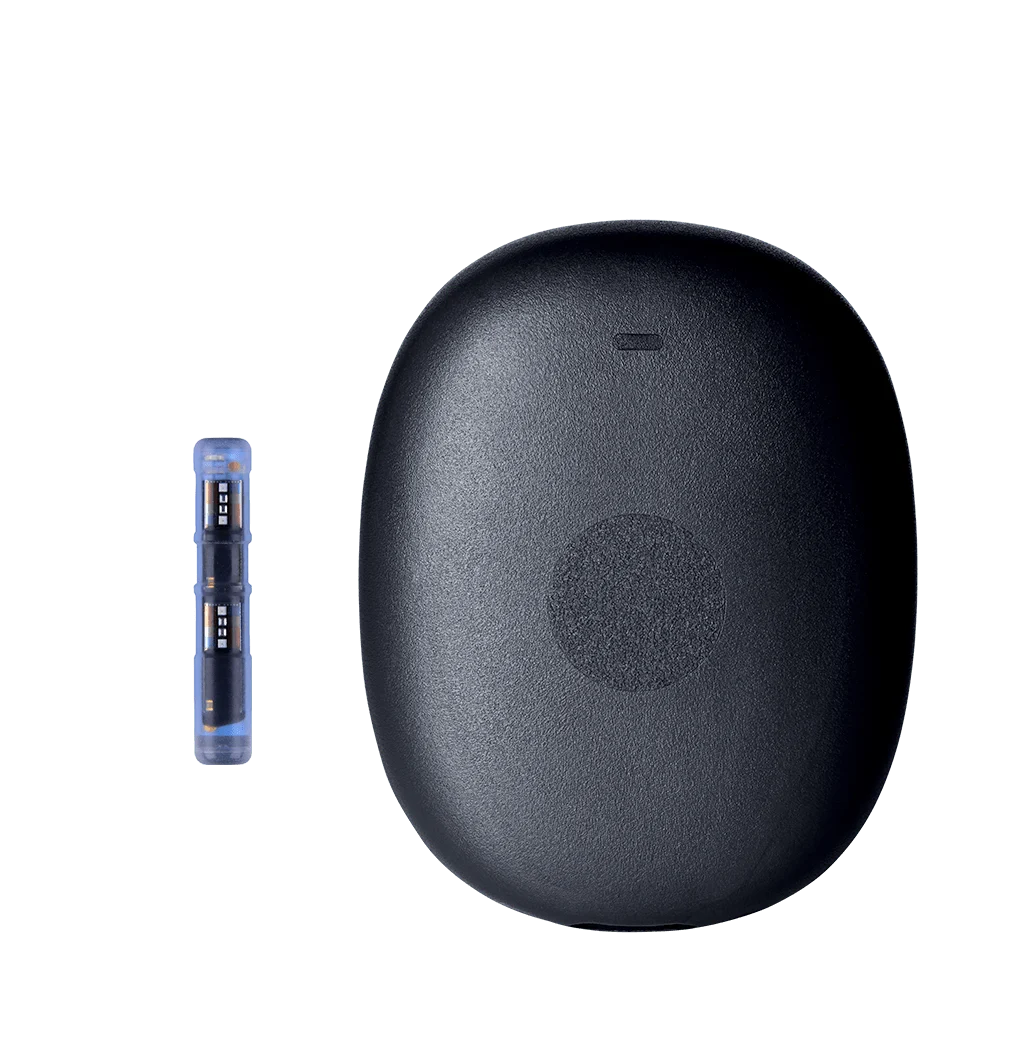
Just this week, after an unfortunately obnoxous insurance battle (this is the United States, after all), I received my Eversense 365 implant -- it's still healing up, no photo yet! -- but a small incision with local anesthetic, and a small sensor implanted under the skin means that the chemically sensitive component of the system is secured internally. The transmitter - responsible for bringing the data back to the mobile app - is still external, but this solves that "biggest drawback", since the adhesive can be replaced daily (or even more often, if needed), and the transmitter can be removed either for activities where it is inconvenient or for safekeeping should the adhesive fail. You don't receive data while it's off, but you also don't need to buy a new sensor - just stick it back on when you can.
Anyway, I find it neat, I'm excited, and this probably sounds more like an ad than it does like a geek-out, but it's genuinely the small things that make diabetes that much easier to deal with.
For those interested: https://www.eversensecgm.com/eversense-365/ - or feel free to contact me if you have questions you need to ask someone who's actually tried one.